
Poverty of Time, Gender, and Social Housing in Santiago de Chile. A Qualitative Analysis
DOI:
https://doi.org/10.7764/EURE.48.143.05Keywords:
social inequality, urban periphery, segregationAbstract
This work focuses on the importance of the concept of time poverty for a welfare analysis of social housing users in the city of Santiago, Chile. It shows the relationship between spatial segregation of social housing, time use and production of inequalities, with special emphasis on gender inequalities, from a qualitative perspective. This is based on a case study carried out in San Guillermo housing project, at Bajos de Mena, in Puente Alto district, which was approached with an ethnographic methodology during the year 2019. During the investigation, we use observation, interviews, and mobile ethnographies, to show the dynamics of daily production and reproduction of inequalities in the segregated shanty town, based on an analysis of the work time, care and domestic work time, leisure and sociability time and commuting time.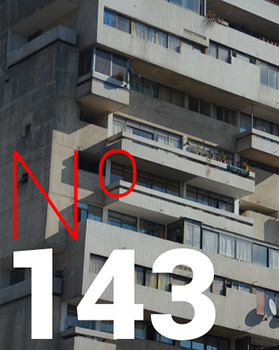
Downloads
Published
2022-01-02
How to Cite
Castillo, M., Sanhueza, C., Rosales-Salas, J., & Sandoval, D. (2022). Poverty of Time, Gender, and Social Housing in Santiago de Chile. A Qualitative Analysis. Revista EURE - Revista De Estudios Urbano Regionales, 48(143). https://doi.org/10.7764/EURE.48.143.05
Issue
Section
Dossier: Vivienda social y políticas urbanas
License
Copyright (c) 2022 Revista EURE - Revista de Estudios Urbano Regionales

This work is licensed under a Creative Commons Attribution 4.0 International License.
Al momento de aceptar la publicación de sus artículos, los autores deberán formalizar la cesión de derechos de autor a EURE, según las condiciones establecidas por la Revista.
Ésta establece que el autor autoriza a EURE de manera gratuita, exclusiva e ilimitada a reproducir, editar, publicar, distribuir, publicitar, comercializar y traducir el artículo, a cualquier soporte conocido o por conocer y desarrollar.
Del mismo modo, los autores aseguran que el artículo propuesto es original, no publicado y no propuesto para tal fin a otro medio de difusión.
